I Love My Son-in-Law Embroidery Design Review
As a designer who has spent years navigating the intersection of digital graphics and physical stitching, I approach every new file with a critical eye. The market is flooded with Crafts assets that look perfect on a screen but fall apart under the needle. Today, I am evaluating the I Love My Son-in-Law design, specifically looking at its potential as a machine embroidery design for real-world projects. While the product description highlights it as an SVG print cut file for Cricut and Silhouette machines, my focus here is on how this concept translates when we move from vinyl to thread.
First Impressions: Visual Weight and Emotional Impact
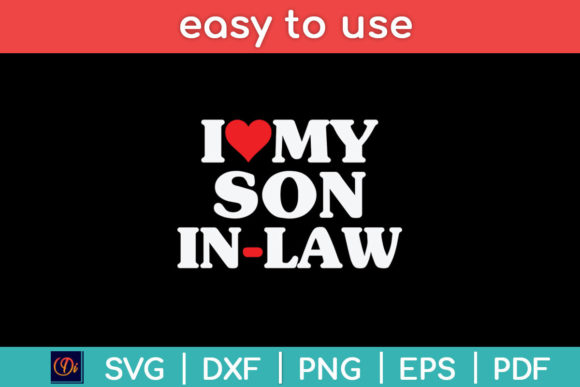
The first thing that strikes me about the I Love My Son-in-Law graphic is its straightforward emotional appeal. In the world of personalized gifts, clarity is king. This design features a heart motif paired with bold text, creating a layout that feels balanced without being overly cluttered. For a craft business owner or an Etsy seller, this simplicity is a double-edged sword; it is versatile enough for various applications, yet simple enough that it requires careful execution to avoid looking cheap.
When visualizing this as an embroidery project, the shape suggests a strong candidate for a fill stitch in the heart area and a satin stitch border for definition. The typography appears legible, which is crucial for custom apparel. If the lettering were too thin or intricate, it would likely get lost in the fabric texture. However, because the design is rooted in Graphics meant for cutting, the lines are clean. This bodes well for digitization, assuming the curves are smooth enough to handle the tension of a running stitch without puckering.
A Real-World Scenario: The Holiday Sweatshirt Challenge
Let’s imagine a specific scenario: A client comes into your shop asking for a holiday gift for her son-in-law. She wants something funny but heartfelt to wear during family gatherings. You decide to use the I Love My Son-in-Law design on a heavy cotton sweatshirt. This is where the rubber meets the road.
On a textured fabric like fleece or French terry, the stitch density becomes the most critical factor. If you rush the digitization of the heart, the fill stitch might not cover the loops of the fabric, leading to a "see-through" effect that looks unprofessional. Conversely, if the density is too high, the sweatshirt will stiffen, ruining the drape of the garment. As a reviewer, I would advise testing this design on a scrap piece of similar fabric first. Check the backside to ensure the stabilizer is holding up and that there isn't excessive thread buildup causing the fabric to pucker around the edges of the text.
The color choice also plays a massive role here. On a dark gray sweatshirt, using white thread for the text and a contrasting red for the heart creates immediate visual pop. This contrast enhances the finished product value, making it feel like a boutique item rather than a generic craft fair find. Customers react positively to high-contrast designs because they are readable from a distance, which increases the likelihood of the wearer getting compliments—and social media shares.
Expanding the Use Cases: From Totes to Nursery Decor
Beyond the sweatshirt, the versatility of I Love My Son-in-Law opens doors for other handmade products. Imagine this design on a sturdy canvas tote bag. Here, the flat surface of the bag allows for more intricate detailing if you choose to add decorative accents like small stars or borders around the main graphic. The durability of the tote bag means the embroidery must withstand frequent washing and handling. A tight fill stitch pattern ensures longevity, preventing threads from snagging on keys or zippers inside the bag.
Another angle is the personalized gift for a baby shower or a new arrival. If the son-in-law is becoming a father, this design could be adapted for a onesie or a nursery pillow cover. In this context, the hoop size matters immensely. Baby clothes often require smaller hoops, so you must ensure the design scales down without losing legibility. Tiny lettering can become illegible blobs if the stitch count is too low for the reduced size. Always inspect the design at 100% zoom before committing to the final embroidery file.
Navigating Challenges: Where Caution Is Required
While the design is promising, there are scenarios where I Love My Son-in-Law should be used with caution. Thin fabrics like chiffon or lightweight rayon are poor candidates for this type of dense text and heart combination. The weight of the thread can cause the fabric to distort, leading to a wavy, uneven appearance. Similarly, stretchy knits require a flexible backing and a design that accounts for fabric movement. If the design is too rigid, it may crack or pull away after a few washes.
Curved surfaces present another challenge. Placing this design on a cap brim requires significant adjustment. The text needs to follow the curve perfectly, and the heart must not be distorted by the curvature of the fabric. If you attempt to embroider this on a standard six-inch hoop without adjusting the arc, the result will look amateurish. It is often better to break the design into sections or use a specialized cap frame to maintain the integrity of the machine embroidery design.
Practical Notes for the Professional Designer
For those looking to incorporate I Love My Son-in-Law into their commercial offerings, here are some essential steps to ensure success:
- Test on Scrap Fabric: Never skip this step. Run the design on a piece of the actual fabric you plan to use to check for tension issues and thread consumption.
- Check Thread Color Contrast: Ensure the thread colors stand out against the background. A light gray thread on a white shirt will disappear, reducing the perceived value of the item.
- Review Stitch Density: Adjust the density settings based on the fabric weight. Heavier fabrics need denser fills, while lighter fabrics require more open patterns to prevent stiffness.
- Confirm Hoop Size: Verify that the design fits within your available hoop sizes without needing to reposition mid-stitch, which can lead to registration errors.
- Inspect Small Details: Zoom in on the corners of the letters and the points of the heart. These areas are prone to thread bunching and need precise digitization.
- Use Proper Stabilizer: Invest in a good quality tear-away or cut-away stabilizer. This is the foundation of a professional-looking embroidered patch or garment.
- Verify Licensing: Since this is originally an SVG file for cutting, ensure you have the rights to convert it into an embroidery file and sell the finished goods. Commercial embroidery projects require clear licensing terms.
Final Verdict: A Solid Asset for the Right Market
In conclusion, the I Love My Son-in-Law design holds significant potential for the craft business sector, provided it is executed with care. Its simple, emotive nature makes it a winner for holiday embroidery, wedding gifts, and family appreciation items. However, its success relies entirely on the quality of the digitization and the appropriateness of the substrate.
For the Etsy seller or small shop owner, this design can serve as a staple in your catalog of design assets. It appeals to a broad demographic and fits well into seasonal collections. By paying attention to the nuances of thread colors, fabric texture, and stitch density, you can transform a basic graphic into a premium, handmade product that builds customer trust and brand consistency.
Remember, the difference between a hobbyist project and a professional commercial embroidery piece lies in the details. Take the time to test, refine, and present this design correctly, and it will undoubtedly become a favorite among your clients and customers alike.